The Trades We Hire For

Carpentry
Framing Carpenter
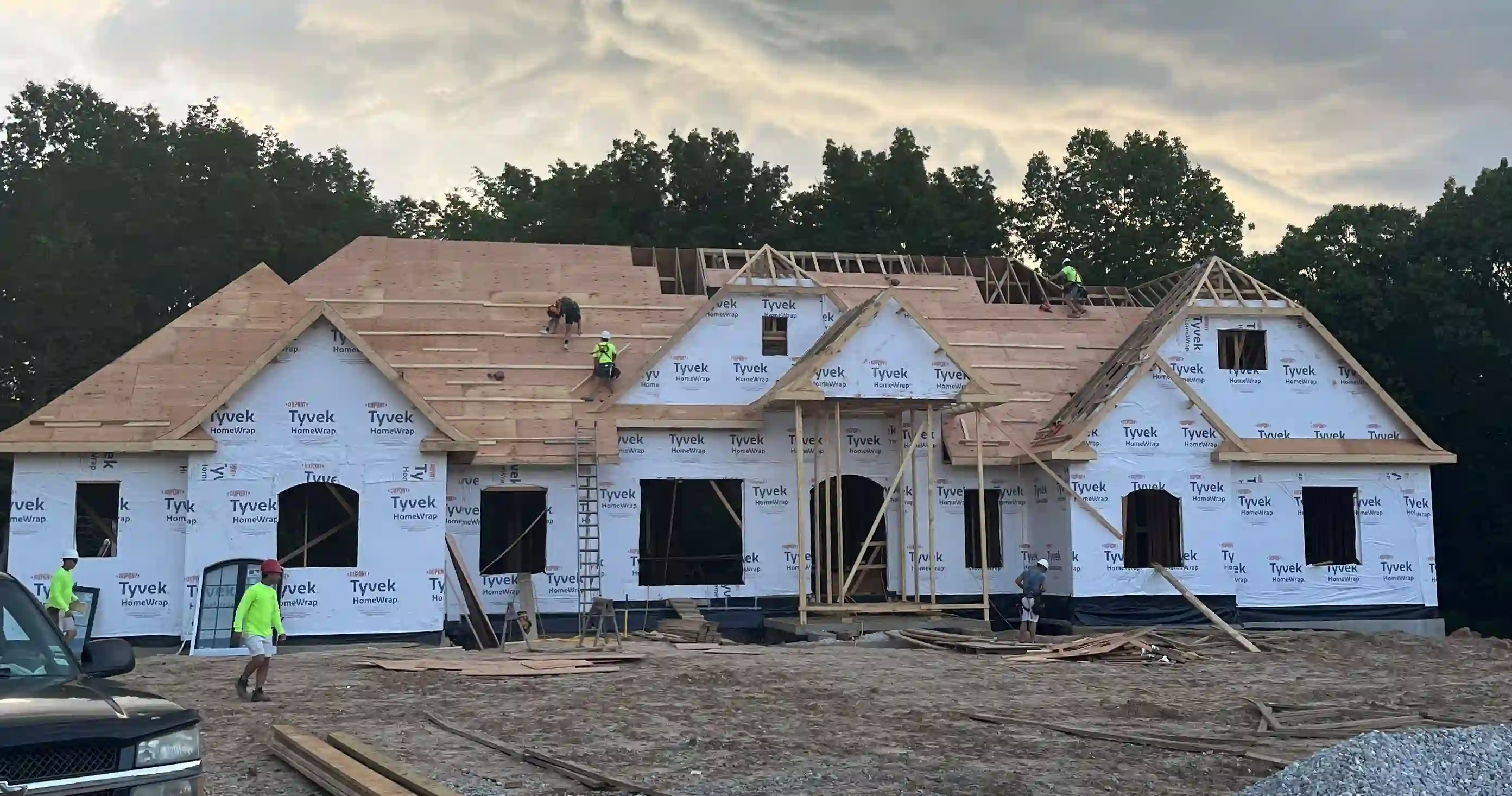
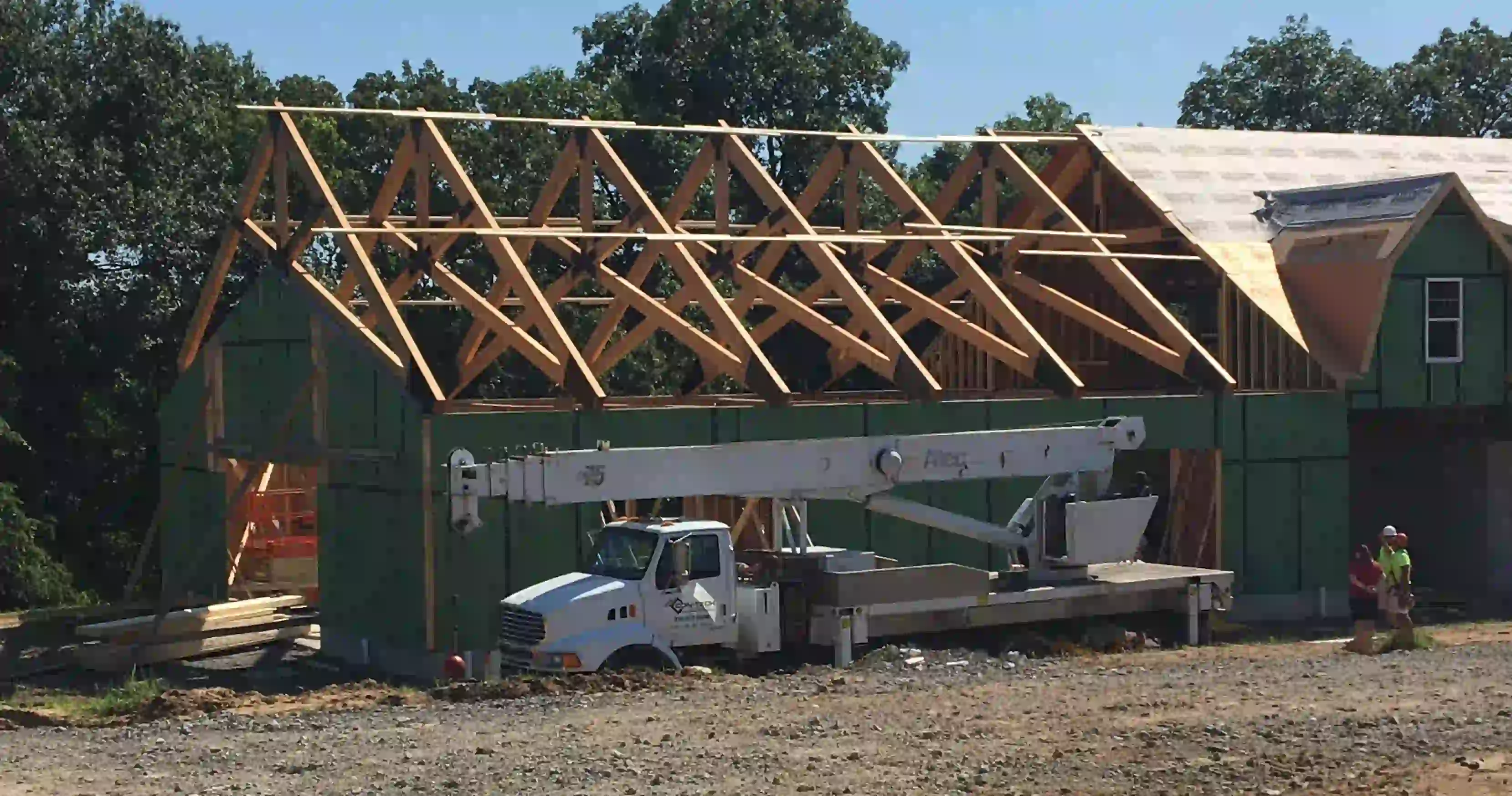
A framing carpenter starts the day reading blueprints to lay out walls, floors, and rooflines, then measures, cuts, and assembles lumber into studs, joists, rafters, and trusses. Much of the day is spent nailing or screwing framework together, squaring and plumbing walls, and installing sheathing and subflooring — often outdoors in heat, cold, wind, or rain. The work involves a lot of heavy lifting, from hauling lumber to hoisting walls and trusses into place, plus time on ladders and scaffolding. Framing carpenters work closely with a crew, coordinating with foremen or superintendents to stay on schedule and ensure everything meets code and blueprint specs before the next trade moves in.
*Positions may not be available at all times. To see which openings are currently availabile and the full details on each, click the "View Open Positions" button at the top or bottom of the page.
Drywall
Drywall Hanger
A drywall hanger measures, cuts, and lifts sheets of drywall into place on walls and ceilings, often working with a partner or lift to handle heavy, awkward panels overhead. The job involves securing sheets with screws, fitting panels around outlets, windows, and doors, and working from ladders or scaffolding for high walls and ceilings — frequently in dusty conditions with a lot of heavy lifting.
Drywall Taper (Finisher)
A drywall taper follows behind the hangers, applying joint tape and multiple coats of compound over seams, corners, and screw holes to create a smooth, seamless surface. This involves careful sanding between coats, matching textures, and prepping walls for paint — work that demands patience, a steady hand, and attention to detail to avoid visible seams once the job is finished.
*Positions may not be available at all times. To see which openings are currently availabile and the full details on each, click the "View Open Positions" button at the top or bottom of the page.
Flatwork
Flatwork Laborer
A flatwork laborer preps and pours concrete for garage floors, basement floors, sidewalks, patios, driveways, commercial slabs, curbs and gutters, parking lots and more  — setting forms, grading and compacting the base, placing rebar or mesh, and wheeling or shoveling concrete into place as it's poured. The work is physically demanding, with a lot of heavy lifting, often outdoors in the elements, and requires close coordination with the finishing crew to keep pace with the pour.
Flatwork Finisher
A flatwork finisher works the surface of freshly poured concrete — screeding, floating, edging, and troweling to create a smooth, level, and properly sloped finish. Timing is everything, since the finisher has to read the concrete as it cures and apply the right technique at the right moment, whether that's a broom finish on a driveway or a smooth trowel finish on a garage floor.
*Positions may not be available at all times. To see which openings are currently availabile and the full details on each, click the "View Open Positions" button at the top or bottom of the page.
Foundations
Foundations Laborer
A foundations laborer supports the crew by setting up and breaking down forms, handling rebar, mixing and placing concrete, and keeping the site organized and ready for each stage of the pour. The work involves a lot of heavy lifting and digging, often outdoors in the elements, and requires stamina to keep pace through long pours.
Foundations Carpenter
A foundations carpenter takes all the critical measurements, reads blueprints, and sets and squares the forms to ensure walls and footings are built exactly to spec. This role demands precision and strong math skills, since even small errors in layout can throw off the entire structure — all while working alongside the crew to keep the pour moving on schedule.
*Positions may not be available at all times. To see which openings are currently availabile and the full details on each, click the "View Open Positions" button at the top or bottom of the page.
Plumbing
Plumbing Laborer
A plumbing laborer assists the crew by digging trenches, hauling and staging pipe and fittings, and keeping the work area organized and ready for each install. The work involves a lot of heavy lifting and time spent both outdoors and in tight crawlspaces or basements, supporting the plumber through rough-in and finish stages.
Certified/Experienced Plumber
A certified plumber reads blueprints to plan and install water supply, drain, waste, and vent systems, cutting, fitting, and soldering or gluing pipe to code. This role requires a state license and hands-on experience troubleshooting issues, testing systems for leaks, and coordinating with inspectors to make sure every install passes code before walls close up.
*Positions may not be available at all times. To see which openings are currently availabile and the full details on each, click the "View Open Positions" button at the top or bottom of the page.

Shape Your Future With Builder's Bloc.

If you are new to the construction industry, we provide on-the-job training and formal training through the union to build a lifelong career with the company. Formal training is provided at no cost, covered by union dues. If you are experienced, we value the expertise you bring to ensure quality craftmanship and training for those less experienced. We have opportunities for carpentry, drywall, flatwork, foundations, and plumbing.
OUR WORK CULTURE

A Culture Built on Solid Principles.

Our culture is built on three core principles: safety, quality, and teamwork. At Builder's Bloc, every team member understands that we work in a fast-paced environment where accountability, communication, and craftsmanship matter.
employee testimonials

What our People say about Builder's Bloc

Builder’s Bloc has a team of employees who have built their entire construction career with the company. Here is what some of them have to say:
“Even in a downturn of the economy the company always kept me working. I’ve never had a lack of work.”
“There is room for advancement here. You can continue to move forward.”
“Working for Builder’s Bloc I’ve never had to worry about the pay. Never had to worry about having work.”
“You have to be willing to do the job you don’t like first. Move the lumber, wrap the Tyvek. The sooner you can get that done, the sooner you can move on to the job you do like. This is a very rewarding job because you can see what you have done.”
“I like seeing what I have done and being proud of it. I just like building houses. I would rather build houses because it means something. Commercial work is more impersonal. Residential work means something to people.”
“Pay is good. Benefits are good. This company has supplied for my family for 24 years.”
“I wanted a union job for retirement, benefits, and insurance.  The insurance is completely paid for my family with good coverage.”
“If you are hungry and motivated there is plenty of work for you. Employees gain value by showing up and doing good work. If you put in the work, you establish yourself and have a stronger future.”